
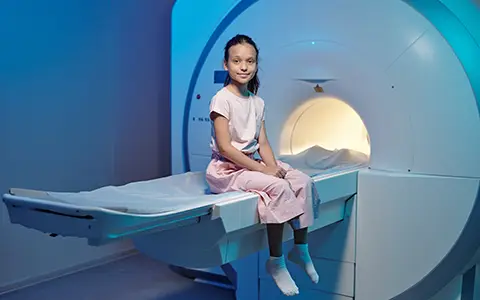
One Test. Many Answers.
A Heart MRI, also called a cardiac MRI or “cardiovascular magnetic resonance” (CMR) imaging, is a way to take clear pictures and videos of the human heart. It can be used to measure the size of the heart and how well it functions.
A Heart MRI can also be used to measure the amount of flow in the heart and blood vessels.
A Heart MRI can also create some really cool pictures of the heart which we call a 3D image. This can help us know if there is a heart condition present. In short, a Heart MRI is one test that can give us many answers and can help the doctor to get more information about your heart and find the best way to treat it.
Noninvasive, no radiation.
A Heart MRI can help patients avoid invasive procedures. This can lead to an improved diagnosis, and in some cases may even help to reverse heart disease.
Importantly, a Heart MRI does not use radiation, such as X-rays or radioactive substances. Instead, it makes use of a strong magnet and radio waves. This makes a Heart MRI a very safe option for most patients.
Advanced diagnosis means better care.
A Heart MRI allows physicians to provide a more accurate diagnosis, helping them to determine the most appropriate treatment path for their patients. A Heart MRI is able to identify details of the heart and its function that are not possible by other imaging tools.
The clear detailed images of a Heart MRI can reveal different types of heart problems. This includes heart defects that were present from birth, problems with the heart valves, heart tumors, inflammations, coronary artery abnormalities, and various heart muscle diseases. Heart MRI can also measure chamber size, blood flow more reproducibly compared to other imaging tools.
Most importantly, it helps your physician better understand ways to provide treatment and next steps.